

That old phone sitting inside your drawer may not feel like a big deal. Maybe it has a cracked screen, a weak battery, or simply got replaced by a newer model. But multiply that one unused phone by millions of households, and the problem gets much bigger.
India is already one of the world’s largest e-waste generators. A 2026 NITI Aayog) report, prepared by TERI, says India accounts for around 7 percent of global e-waste volumes and ranks third globally. The same report estimates India’s e-waste recycling rate at only around 10 percent.
This is where the idea of giving old electronics a second life becomes important. Instead of treating every old phone as waste, platforms such as Cashify try to keep usable devices in circulation through buyback, refurbishment, resale, reuse of parts, and responsible recycling.
So, how does this actually help India’s e-waste problem? Let’s break it down.
Also Read: E-Waste Rising: The Next Big Threat
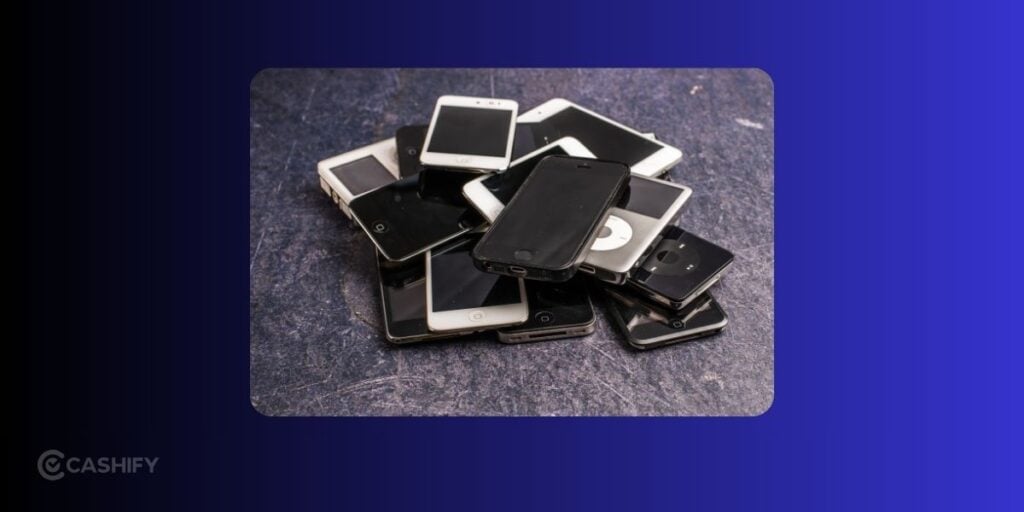
India Has An E-Waste Problem, And It Is Growing
India’s electronics consumption has grown rapidly over the past few years. Smartphones, laptops, tablets, televisions and other gadgets are now part of everyday life.
Naturally, that also means more devices eventually reach the end of their useful life.
Government data shows the scale of this growth. CPCB reported e-waste generation of around 16.01 lakh tonnes in FY 2021-22, up from around 7.08 lakh tonnes in FY 2017-18. (Press Information Bureau)
The latest NITI Aayog report paints an even bigger picture. It says household e-waste, including smartphones, computers, televisions and other consumer electronics, accounts for roughly 60-70 percent of India’s total e-waste.
The problem is not just the amount of waste. It is also what happens after people stop using their devices.
A phone thrown into regular household waste can eventually reach an informal dumping or processing chain. Electronics contain valuable materials such as copper, gold, silver and other metals, but they can also contain hazardous substances. Recovering the useful materials safely requires proper collection, dismantling and recycling systems.
The Bigger Problem Is Sitting Inside Our Drawers
Here is something interesting about e-waste in India: not every old device immediately becomes waste.
A lot of phones simply sit unused.
The 2026 NITI Aayog report says nearly 60 percent of consumers retain unused devices. It results in an estimated 1.3 million tonnes of e-waste being kept out of circulation. The reasons include people thinking they might need the device later, data privacy concerns, and the belief that an old device has little resale value.
Think about the old phones at home.
There may be an old Redmi that still works. An iPhone that was replaced after an upgrade. A laptop that has not been switched on for two years. A phone whose screen is broken but whose motherboard, camera or other components still work.
Calling all of these devices “trash” is not quite right.
They still contain value.
That is where the idea of recommerce comes in.
Also Read: How Cashify Complies With E-Waste Management Rules
How Cashify Solves Indian e-Waste Problem?
Earlier, while people used to discard their phones. They now turn to platforms like Cashify for selling their old devices securely and safely from the comforts of their homes.
Today, its model goes beyond simply buying an old phone and reselling it.
Cashify says that phones sold through its platform can go through inspection, repair and refurbishment before being resold. Older devices that are not suitable for refurbishment can also have their usable spare parts recovered for use in other repairs.
There’s a simple chain:
- Old phone > Collection > Testing > Refurbishment/reuse > Resale
And for devices that have reached the actual end of their useful life:
- Old phone > Collection > Recycling > Material recovery
That difference matters.
The best way to deal with e-waste is not always to recycle a device immediately. If a phone can still work for another person, keeping it in use for another ownership cycle can delay the point at which it becomes waste.
Also read: 5 Companies That Are Going Carbon Neutral: Word Environment Day
Step 1: Cashify Gets Old Phones Out Of The Drawer
The first hurdle is collection.
People need a reason to part with an old phone. Cashify’s buyback model gives them one: money in exchange for a device they no longer use.
Its current phone recycling process lets users select their device, book a pickup and receive a reward for the device. Cashify also has a separate recycling route for phones that are no longer suitable for normal resale.
If responsible disposal requires a consumer to find a recycler, travel somewhere, figure out the process, and then deal with paperwork, many people will simply keep the phone at home.
A doorstep collection model removes some of that friction.
Step 2: Not Every Old Phone Needs To Be Recycled
An old phone does not automatically mean a useless phone.
Suppose someone upgrades from a two-year-old 5G smartphone to a newer model. The old phone may still work perfectly. Sending it straight for material recycling would recover its raw materials, but it would also end the useful life of the phone itself.
Refurbishment takes a different route.
Cashify says its refurbished devices go through testing and correction of issues before being resold. Its refurbished-device policy also says phones are tested for areas such as battery condition, cameras, buttons, audio, screen responsiveness and connectivity, along with secure data wiping.
Step 3: Old Parts Can Still Be Useful
Now consider a phone that is too old or damaged to be refurbished.
It may still contain usable components.
Cashify says older phones can be used for spare parts, which are then supplied to retailers for customers repairing older devices.
Step 4: What Cannot Be Reused Can Enter Recycling Channels
Eventually, every electronic device reaches the end of its useful life.
This is where proper recycling becomes necessary.
Cashify’s e-waste policy says the company has joined CPCB-authorised Producer Responsibility Organisation Karo Sambhav for its Extended Producer Responsibility compliance. It also says devices marked for recycling are sent to government-authorised centres.
The idea is straightforward: recover materials instead of sending electronics into regular waste streams.
Smartphones contain materials that can be recovered and used again. Cashify’s recycling page specifically points to materials such as copper, lead and gold that can be recovered from mobile devices.
Why Reuse Matters Before Recycling
Recycling gets most of the attention when we talk about e-waste. But reuse and refurbishment can play an equally important role.
Think of a smartphone as having several stages of life:
The longer a device remains useful, the later it reaches the recycling stage.
Cashify’s 2026 research also points to this shift. Its latest report says 54.6 percent of devices traded in on its platform are now 5G-enabled, compared to 36 percent in 2024. That suggests newer phones are already entering the secondary market instead of being limited to first-owner use.
This matters because a refurbished phone does not necessarily mean an outdated phone.
A relatively recent phone can move from one owner to another while remaining useful for several more years.
The E-Waste Problem Is Bigger Than Any One Company
It is also important to keep the picture realistic.
Cashify can help create a formal route for old smartphones, but no single company can solve India’s entire e-waste problem.
The NITI Aayog report says India’s informal sector still accounts for a major share of e-waste processing. It estimates the informal sector handles around 78 percent of India’s total e-waste. Informal processing can have much lower material recovery rates than formal recycling facilities.
The report also points to another problem: access.
India has thousands of collection points and authorised recyclers, but the formal collection network does not yet cover the country evenly. Consumer awareness and concerns around data privacy also affect how people dispose of old electronics.
So the solution needs several pieces working together:
- Easier collection
- Better consumer awareness
- Trusted buyback and trade-in channels
- More refurbishment
- Safe parts recovery
- Formal recycling
- Stronger producer responsibility
- Better integration of informal workers into formal systems
Final Words: How Cashify Solves Indian e-Waste Problem
Attaining consumer’s trust is an essential standpoint in the overall journey to tackle waste generation in India. In times when waste management is becoming a matter of prime concern, Cashify ensures that it does its part in increasing the sale of recycled and refurbished products with 32-point quality checks, providing warranty to the buyers, and getting amazingly low rates for the devices.
An all-round smartphone care provider, Cashify grew through the stages to be what it is today. Majorly known as a smartphone buyback platform, Cashify now caters to smartphone users across India and helps them with everything they would ever need for their devices. From repair to accessories and refurbished gadgets, the concern for an effective way to reuse, reduce and recycle electronic gadgets remains our key focus area.
But was it always aimed to be a smartphone buyback and smartphone-based service? How has our journey into establishing ourselves in India’s re-commerce market been? This YourStory article covers the major milestones that shaped our present and gave us the vision for working towards a better environment by making e-waste a thing of the past. Click here to read full article.
Buying refurbished mobile phones was never this easy. Sell your old phone and get exclusive offers & discounts on refurbished mobiles. Every refurbished phone is put through 32-point quality checks to ensure like-new standards and comes with a six-month warranty and 15-day refund. Buy refurbished phone easily on no-cost EMI today!